Fill Quality Over Forecast: How Execution Costs Quietly Erode Crypto Wagering Returns
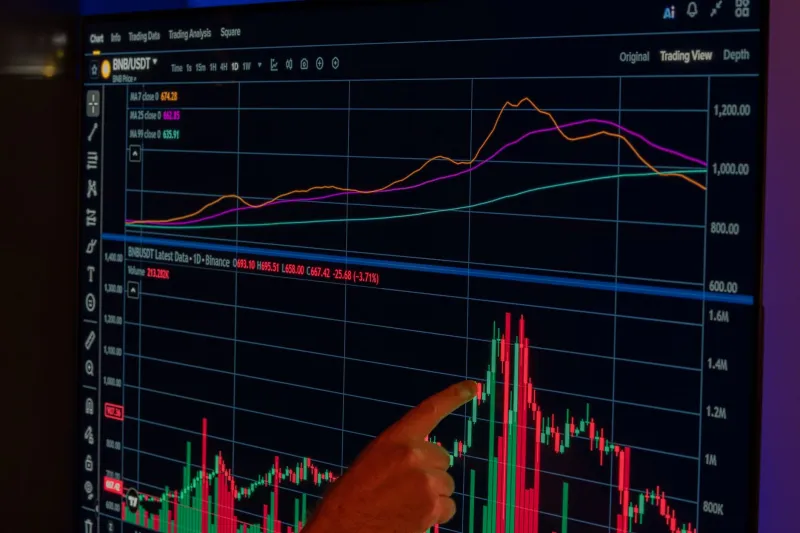
There is a persistent mythology in crypto wagering circles that market timing is the primary driver of long-run profitability. The assumption runs deep: identify the right directional move, enter at the right moment, and the returns follow. Experienced practitioners, however, know that this framing conceals a more consequential variable — the quality of the fill itself. The difference between where you intended to enter and where you actually entered, compounded across hundreds of positions, frequently accounts for more performance drag than any forecasting error.
At 789WinPro, we treat execution as a discipline unto itself. The analysis below addresses how professional wagerers systematically quantify and reduce what might be called the execution tax: the aggregate cost imposed by slippage, routing inefficiencies, and suboptimal order construction.
Defining the Execution Tax
The execution tax is not a single line item. It is the sum of several overlapping frictions that emerge between the moment you decide to act and the moment your position is confirmed on-chain or on-book.
The most visible component is the bid-ask spread — the gap between what buyers are offering and what sellers are asking at any given instant. In liquid markets for major assets like Bitcoin or Ethereum, this spread may appear negligible. During volatile periods, however, spreads widen dramatically, and the cost of crossing that spread on a large position compounds quickly.
Less visible but equally consequential is price impact — the degree to which your own order moves the market against you as it fills. A position sized at 0.1% of daily volume in a major pair carries minimal impact. The same dollar amount placed in a thinner market or during a liquidity gap can shift the order book by a meaningful percentage, meaning the last portion of your fill executes at a materially worse price than the first.
Finally, there is latency slippage — the degradation that occurs between order submission and order execution due to network delays, venue processing queues, or smart contract confirmation lags in decentralized environments. In fast-moving conditions, even a two-second delay can translate into a fill that bears little resemblance to the price that triggered your decision.
Slippage Curves and the Volatility Problem
Slippage does not behave linearly. Professional wagerers who have studied their own execution records consistently observe that slippage costs accelerate non-linearly during periods of elevated volatility — precisely the moments when position sizing and directional conviction tend to be highest.
This creates a compounding problem. When volatility spikes and the market presents what appears to be a high-conviction opportunity, the cost of entering that position is simultaneously at its worst. The slippage curve steepens, spreads widen, and liquidity providers pull back from the order book. A wagerer who has back-tested a strategy using mid-price assumptions will find that live execution during volatile regimes consistently underperforms the model — not because the signal was wrong, but because the execution environment was never properly accounted for.
The practical solution is to construct slippage curves specific to each venue and market condition. This requires logging every fill with timestamps, intended entry price, actual fill price, order size, and prevailing volatility at the time of execution. Over a sufficient sample, patterns emerge that allow a wagerer to estimate, in advance, how much slippage to expect for a given position size under different volatility regimes. That estimate then becomes an input to position sizing — a position that pencils out at 2% expected edge may only carry 0.8% expected edge after realistic slippage assumptions are applied.
Order Routing as a Competitive Advantage
Where you send your order matters as much as how you construct it. Different venues — centralized exchanges, decentralized protocols, and aggregators — have meaningfully different liquidity profiles, fee structures, and fill quality characteristics.
Centralized venues with maker-rebate programs reward patient orders that add liquidity to the book. A wagerer who can consistently enter positions using limit orders rather than market orders captures the spread rather than paying it. The tradeoff is execution certainty — a limit order may not fill if the market moves away before the order is matched. For directional positions with defined entry criteria, this tradeoff is often worth accepting.
Decentralized venues introduce a different set of considerations. On automated market maker platforms, slippage is a function of pool depth and position size, and it is deterministic — it can be calculated before execution. The risk in decentralized environments is not unpredictable slippage but rather MEV exposure (maximal extractable value), where sophisticated bots front-run or sandwich your transaction, effectively imposing an additional tax on your fill. Serious wagerers operating in decentralized environments use private transaction relays, slippage tolerance settings, and timing strategies to mitigate this exposure.
Aggregators that route across multiple venues simultaneously can improve fill quality for larger positions by sourcing liquidity from several pools at once. The benefit is real but not unconditional — aggregator routing introduces its own latency, and during fast markets the quoted improvement may not survive the additional processing time.
Calculating Whether Better Execution Is Worth the Cost
Premium execution infrastructure — co-location services, direct market access arrangements, professional-grade API connections, and MEV protection relays — carries real costs. The legitimate question is whether those costs are recovered through improved fill quality.
The framework for answering this question is straightforward. For a representative sample of your historical trades, calculate the implementation shortfall for each: the difference between the decision price (the price at the moment you decided to act) and the average fill price, expressed in basis points. Sum these shortfalls across your book. Then model what that figure would look like if you had access to superior routing and order types, using published data from venues on their average fill improvement statistics.
If the projected reduction in implementation shortfall — measured in basis points per trade, multiplied by your average position size and trade frequency — exceeds the cost of the premium infrastructure, the investment is justified on purely economic grounds. If it does not, the infrastructure is a cost center rather than an edge.
This calculation should be revisited periodically, because both your trading patterns and venue liquidity conditions change over time. A routing strategy that delivered measurable improvement twelve months ago may have become less effective as market structure evolved.
Building Execution Quality Into Your Analytical Process
The most durable insight from this analysis is that execution quality should be treated as a first-class variable in strategy evaluation, not an afterthought. Before deploying a new approach, a professional wagerer should run the strategy through an execution cost model that accounts for realistic slippage at the intended position sizes, spread costs under different volatility regimes, and the specific fee structure of the venues being used.
Strategies that appear marginally profitable under clean mid-price assumptions frequently become unprofitable once execution costs are properly modeled. Conversely, strategies with modest gross edges can become compelling net performers if the wagerer has developed a systematic advantage in execution quality.
At 789WinPro, the operating principle is that every basis point recovered through superior execution is a basis point that required no additional forecasting skill, no additional risk, and no additional capital. That is a remarkably efficient source of performance improvement — and one that too few serious wagerers have fully committed to developing.