Code as Collateral: A Professional's Guide to Evaluating Smart Contract Security Before You Wager
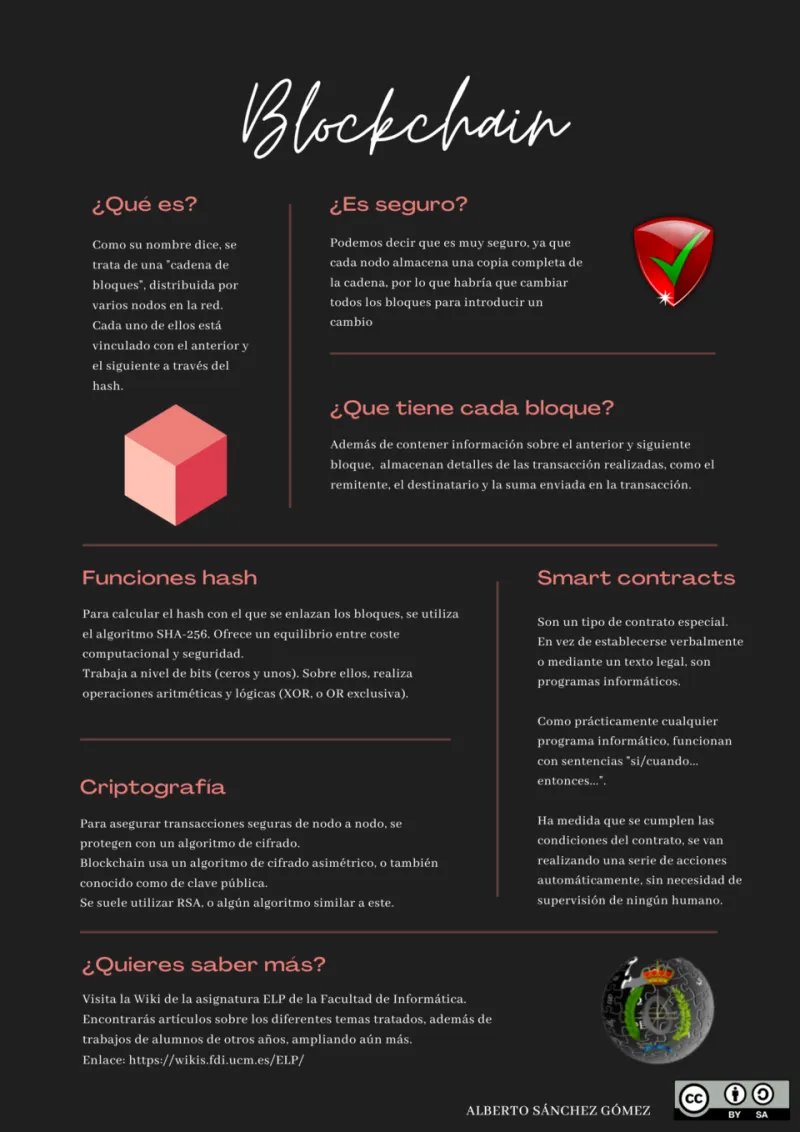
Photo: Albeertoo, CC BY-SA 4.0, via Wikimedia Commons
In traditional finance, institutional investors conduct exhaustive due diligence before committing capital to any counterparty. They review balance sheets, examine regulatory filings, and assess operational risk. The professional crypto bettor must apply an analogous discipline—except the balance sheet is written in Solidity, and the regulatory filing is a smart contract audit report.
Blockchain-based wagering platforms execute wagers, hold funds, and distribute payouts through self-executing code. There is no customer service desk to call when a vulnerability is exploited. There is no FDIC insurance protecting your balance. The code is the contract, and if that code contains flaws, your capital is at risk regardless of how polished the platform's user interface appears.
Understanding how to evaluate that code—or at minimum, how to evaluate those who evaluated it—is a foundational skill for anyone operating at a professional level.
What a Smart Contract Audit Actually Involves
An audit is a formal security review conducted by an independent third party. Reputable auditing firms—such as Trail of Bits, OpenZeppelin, Certik, and Quantstamp—employ teams of security researchers who systematically examine a platform's codebase for vulnerabilities, logic errors, and design flaws.
The process typically involves both automated scanning tools and manual code review. Automated tools can rapidly identify known vulnerability patterns, such as reentrancy bugs or integer overflow conditions. Manual review, however, is where experienced researchers catch the more nuanced issues: flawed business logic, improper access controls, and edge cases that automated scanners routinely miss.
A completed audit produces a formal report that categorizes findings by severity—typically classified as Critical, High, Medium, Low, and Informational. Critical and High findings represent conditions under which user funds could be stolen or permanently locked. Medium findings may not be immediately exploitable but represent meaningful risk under certain conditions. Professional bettors should treat any unresolved Critical or High finding as a disqualifying factor.
Red Flags That Signal Inadequate Security Posture
Not all audit reports are created equal, and the existence of an audit does not guarantee security. The following indicators warrant serious scrutiny.
Unverified or Unknown Auditors. Some platforms publish documents labeled as security audits that were produced by obscure or unverifiable entities. Before trusting any audit, confirm that the auditing firm has an established track record, a verifiable public presence, and prior reports accessible for comparison. Cross-referencing audit firms against community databases and blockchain security forums is a reasonable starting point.
Outdated Audits Following Code Changes. A platform that received a clean audit 18 months ago but has since deployed significant contract upgrades is operating on stale assurances. Smart contract code is not static on many platforms. Each material update should be accompanied by a fresh review of the modified components. Ask whether the platform publishes changelogs and whether those changes correspond to updated audit documentation.
Unresolved Findings with No Remediation Notes. Audit reports should document not only the vulnerabilities identified but also the platform's response to each finding. A responsible development team acknowledges issues, documents the remediation steps taken, and may commission a follow-up review to confirm fixes were implemented correctly. Reports that simply list findings without any developer response are a significant concern.
Closed-Source Contracts. On public blockchains, contract code can be verified against what is actually deployed on-chain. If a platform cannot or will not provide the on-chain contract addresses for independent verification, that opacity itself is disqualifying. Tools such as Etherscan allow anyone to compare a published audit against the code actually running on the network.
Common Vulnerability Patterns Every Bettor Should Recognize
Even without a background in software engineering, professional bettors benefit from familiarity with the vulnerability categories most commonly exploited in the wagering context.
Reentrancy Attacks occur when a contract sends funds to an external address before updating its internal state, allowing a malicious actor to repeatedly call the withdrawal function before the balance is decremented. The 2016 DAO exploit—which resulted in the loss of approximately $60 million in Ether—remains the canonical example. This vulnerability class should always appear in any competent audit.
Oracle Manipulation is particularly relevant to wagering platforms that rely on external data feeds to determine outcomes. If the price or event data feeding into a smart contract can be manipulated—whether through flash loans, thin liquidity pools, or compromised data providers—the integrity of every wager depending on that data is compromised.
Access Control Failures involve improperly restricted administrative functions. If a contract's privileged functions can be called by unauthorized parties, an attacker could drain funds, alter payout logic, or disable withdrawals entirely.
Upgradeability Risks are specific to platforms using proxy contract patterns. While upgradeability can be a legitimate design choice, it also means that the platform's administrators retain the ability to alter contract logic after deployment. Professional bettors should evaluate whether upgrade mechanisms are protected by multi-signature requirements and time locks that prevent unilateral, instantaneous changes.
Building an Evaluation Framework
The most efficient approach for a professional bettor is to develop a standardized checklist applied to every platform under consideration. That checklist should include: confirmation that a current audit exists from a recognized firm; verification that the audited code matches on-chain deployments; review of all Critical and High findings and their stated remediations; assessment of whether upgrade mechanisms include adequate governance controls; and a review of the platform's public incident history.
At 789WinPro, technical transparency is a baseline expectation, not a differentiating feature. Platforms that resist scrutiny, obscure their security documentation, or deflect technical questions with marketing language are not appropriate venues for serious capital deployment.
The professional bettor treats security evaluation as a pre-condition to engagement—not an afterthought. In an environment where code governs custody of funds, the ability to read between the lines of a security report is as valuable as any wagering strategy.