Calibrating Exposure: A Professional Framework for Sizing Wagers Across Shifting Volatility Regimes
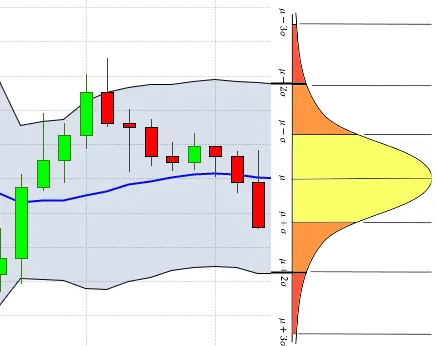
Photo: Albert Callisto, CC BY-SA 4.0, via Wikimedia Commons
Among the most consequential — and most frequently neglected — decisions in professional crypto wagering is not which position to take, but how large that position should be. Experienced practitioners understand that the sizing decision is inseparable from the current market environment. A stake that is appropriately calibrated during a low-volatility consolidation phase can become dangerously outsized when conditions shift toward elevated uncertainty.
The concept of volatility regime management borrows heavily from institutional portfolio theory, but its application to the crypto wagering context is both practical and essential. At 789WinPro, we advocate for a systematic, data-driven approach to position sizing — one that removes emotional judgment from the equation and replaces it with pre-defined rules responsive to measurable market conditions.
Understanding Volatility Regimes in Crypto Markets
Cryptocurrency markets do not operate within a single, uniform volatility environment. They cycle through identifiable regimes: periods of relative calm punctuated by episodes of sharp, sustained turbulence. These transitions are not random — they are measurable, and to a meaningful degree, they are anticipatable.
A low-volatility regime is characterized by compressed price ranges, reduced trading volume relative to historical norms, and tight bid-ask spreads. These conditions typically emerge during prolonged consolidation phases or periods of macro stability. For professional bettors, this environment generally supports larger relative position sizes, as the expected magnitude of adverse price movement is constrained.
A high-volatility regime presents the inverse profile: expanded price ranges, elevated volume, and wider spreads. These conditions frequently coincide with major macroeconomic announcements, regulatory developments, or acute liquidity events within the crypto ecosystem itself. In this environment, maintaining the same position sizes as during calm periods represents a material and unnecessary elevation of risk.
The critical discipline is detecting regime transitions early and adjusting exposure before, not after, the full force of a new regime manifests in portfolio performance.
Quantitative Indicators for Regime Detection
Several well-established metrics provide reliable signals for identifying and monitoring volatility regime shifts:
Realized Volatility (RV) measures the actual magnitude of price fluctuations over a defined historical window, typically expressed as an annualized standard deviation. A rolling 30-day realized volatility calculation provides a current baseline. When this figure rises meaningfully above its six-month average, the market has likely entered an elevated regime.
Implied Volatility (IV) is derived from options pricing and reflects the market's forward-looking expectation of price movement. Platforms such as Deribit and the Volmex Finance index provide accessible IV data for major cryptocurrencies. The IV-RV spread — the difference between what options markets expect and what has recently occurred — is a particularly informative signal. A widening spread where implied volatility significantly exceeds realized volatility suggests that sophisticated market participants are pricing in a volatility expansion that has not yet fully materialized in spot prices.
Regime-Detection Models offer a more formal quantitative approach. Hidden Markov Models (HMMs) are commonly applied in institutional settings to probabilistically classify market states based on return and volatility data. While building a full HMM implementation requires statistical expertise, simplified approximations — such as dual-threshold rules based on rolling volatility percentiles — can be constructed and automated using widely available tools including Python libraries and platforms like TradingView's Pine Script.
A practical starting point: classify the current regime as "low" when 30-day realized volatility falls below its 40th historical percentile, "elevated" when it exceeds the 60th percentile, and "transitional" in the range between those thresholds. These thresholds should be calibrated to the specific assets and timeframes relevant to your wagering activity.
The Volatility Ladder: A Practical Sizing Framework
Once regime classification is operational, the next step is mapping each regime to a corresponding position sizing rule. The "volatility ladder" concept structures this mapping explicitly:
| Volatility Regime | Realized Vol Percentile | Position Size Multiplier |
|---|---|---|
| Compressed | Below 30th | 1.25× baseline |
| Low | 30th–50th | 1.0× baseline (standard) |
| Transitional | 50th–70th | 0.75× baseline |
| Elevated | 70th–85th | 0.50× baseline |
| Extreme | Above 85th | 0.25× baseline or pause |
The baseline position size should itself be derived from a sound bankroll management methodology — fractional Kelly or a fixed percentage approach are both defensible starting points. The multipliers then scale that baseline up or down in response to current conditions.
This structure ensures that exposure contracts automatically as risk increases and expands when conditions support it — without requiring a discretionary judgment call at each decision point.
Automating Regime Signals to Eliminate Emotional Interference
The framework described above is only as effective as its implementation. Human judgment, particularly under conditions of market excitement or anxiety, is a well-documented source of systematic error. The solution is automation.
Configure alerts within your analytics platform of choice to notify you when realized volatility crosses the threshold from one regime tier to the next. Pair these alerts with pre-written decision rules — not guidelines, but explicit instructions — that specify exactly how your position sizing will adjust in response. When an alert fires, the decision has already been made. Execution becomes mechanical.
For practitioners with programming capability, this process can be further automated through API integrations that directly adjust wagering parameters when volatility thresholds are breached. Several platforms accessible to US users support programmatic account management through documented APIs.
The Psychological Challenge of Scaling Back During Bull Conditions
The most psychologically demanding aspect of this framework is not reducing exposure during periods of obvious market stress — that adjustment feels intuitive. The genuine challenge arises during extended bull runs, when volatility is declining, prices are rising, and the emotional pull toward larger positions is strongest.
This is precisely the moment when the framework earns its value. Historical crypto market data consistently shows that the most severe drawdowns follow periods of compressed volatility and elevated confidence. The conditions that feel safest are frequently the conditions in which structural fragility is accumulating beneath the surface.
Professional practitioners internalize this pattern not as a reason for pessimism, but as a structural argument for systematic discipline. The framework is not designed to prevent participation in favorable conditions — it is designed to ensure that participation remains proportionate to the actual risk environment, regardless of how that environment feels in the moment.
Continuous Calibration and Review
No regime-detection framework is static. The volatility dynamics of cryptocurrency markets evolve as the asset class matures, as institutional participation deepens, and as the macroeconomic context shifts. A calibration that was well-suited to 2021 market conditions may require meaningful adjustment for the current environment.
Schedule a quarterly review of your regime thresholds, reviewing how accurately they classified historical market states and whether the position sizing multipliers produced the risk-adjusted outcomes you intended. Treat this review as a formal analytical exercise, not a casual reassessment.
At 789WinPro, the commitment to professional-grade wagering is grounded in exactly this kind of systematic rigor. Dynamic volatility management is not a sophisticated add-on for advanced practitioners — it is a foundational element of any serious approach to crypto wagering in the US market.