When the Market Dries Up: Quantitative Approaches to Slippage and Illiquidity Risk in Crypto Wagering
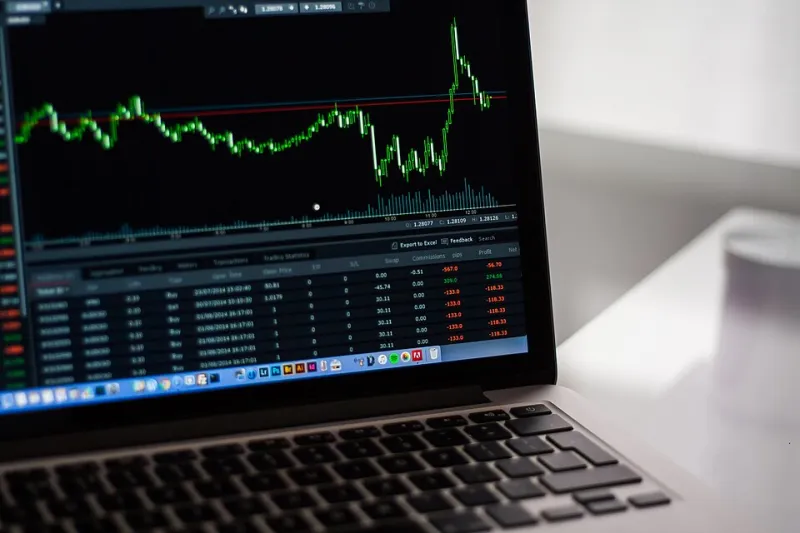
Photo: Negative Space, CC0, via Wikimedia Commons
The Invisible Cost That Compounds Silently
Most professional crypto bettors spend considerable effort optimizing their analytical edge—refining probability models, tightening their expected value calculations, and stress-testing their bankroll allocation strategies. Comparatively few apply the same rigor to execution risk. This asymmetry is expensive.
Slippage—the difference between the price at which a transaction is expected to execute and the price at which it actually settles—is not a peripheral concern for high-volume players. In liquid, high-cap markets, slippage is negligible. In mid-cap or low-cap cryptocurrency environments, particularly during periods of market stress, it can represent a material drag on returns that effectively erodes a carefully constructed edge before a single wager resolves.
For serious players operating through 789WinPro's professional-grade infrastructure, understanding slippage and illiquidity as quantifiable risk variables—rather than background noise—is foundational to sustainable high-volume operations.
Defining the Liquidity Spectrum in Crypto Wagering Contexts
Liquidity in cryptocurrency markets exists on a spectrum, and its implications for wagering differ substantially depending on where a given asset or market sits along that range.
At the high end, Bitcoin and Ethereum markets exhibit deep order books, tight bid-ask spreads, and sufficient volume to absorb large transactions without meaningful price impact. For bettors whose activity is denominated in these assets, execution risk is manageable under most conditions.
The risk profile changes considerably when players engage with wagering platforms that denominate positions in lower-volume altcoins, or when settlement requires conversion through thinner markets. In these environments, three distinct liquidity failure modes become relevant:
Depth illiquidity: Insufficient order book volume to fill a transaction at the quoted price, forcing execution across multiple price levels and producing realized slippage.
Temporal illiquidity: Adequate depth under normal conditions, but rapid withdrawal of liquidity during high-volatility events—a phenomenon well-documented during major macroeconomic announcements or crypto-specific shock events.
Structural illiquidity: Markets that are thin by design, often in newly launched tokens or niche wagering instruments, where even modest transaction volumes produce disproportionate price impact.
Quantitative Slippage Modeling: A Practitioner's Framework
Professional risk management in this context begins with a formal slippage model. The objective is to establish, for any given asset and transaction size, a statistically defensible estimate of expected execution cost under both baseline and stressed conditions.
A practical framework incorporates three inputs:
1. Market Impact Coefficient
The market impact coefficient estimates how much a transaction of a given size will move the prevailing price. For liquid assets, this figure is near zero at typical position sizes. For thinner markets, it can be estimated empirically by analyzing historical order book data: specifically, how far down the book a transaction of your target size would need to reach to fill completely.
Formally, a simplified market impact model expresses slippage as a function of trade size relative to average daily volume (ADV). Positions representing more than 1% of a given asset's ADV should trigger elevated scrutiny; positions above 3% of ADV in volatile conditions warrant serious reconsideration.
2. Volatility-Adjusted Spread Analysis
Bid-ask spreads widen materially during high-volatility periods. A spread that measures 0.15% under normal conditions may expand to 0.8% or beyond during a rapid market dislocation. For players who frequently transact during news-driven volatility—a common scenario in crypto markets—incorporating a volatility multiplier into spread estimates is essential.
Historical volatility data, readily available for major crypto assets, can be used to construct percentile-based spread estimates. A conservative professional might model execution costs using 90th-percentile spread conditions rather than median spreads, accepting that this produces conservative EV estimates in exchange for more reliable downside protection.
3. Liquidity Withdrawal Scenario Testing
Perhaps the most important—and most commonly neglected—component of slippage modeling is scenario testing for sudden liquidity withdrawal. This involves stress-testing position execution under conditions where available order book depth declines by 50%, 70%, or 90% from baseline.
Historical crypto market events provide concrete reference points. During the March 2020 liquidity crisis, the May 2021 crypto selloff, and the late 2022 contagion events following major exchange failures, bid-ask spreads across mid-cap crypto assets expanded by multiples of their historical norms within hours. Bettors who had not modeled these scenarios discovered their execution costs in real time—an expensive education.
Defensive Position-Sizing Under Illiquidity Conditions
Quantitative modeling is only valuable if it drives operational decisions. For professional crypto bettors, the primary operational lever is position sizing.
The core principle is straightforward: position size should scale inversely with liquidity risk. As estimated execution cost rises—whether due to thin markets, elevated volatility, or stressed conditions—the maximum rational position size decreases, because a larger portion of potential return is being consumed by friction before the wager even resolves.
A practical implementation approach:
Establish a slippage budget: Define the maximum acceptable execution cost as a percentage of expected value for any given position. A commonly used professional benchmark is 20%—meaning that if estimated slippage exceeds 20% of your EV calculation, the position is not viable at its intended size.
Apply tiered sizing rules: Categorize your trading assets by liquidity tier and apply corresponding maximum position sizes. High-liquidity assets may permit full-size positions; mid-tier assets warrant a 50-60% reduction; low-liquidity assets should be capped at minimal exposure regardless of analytical conviction.
Implement volatility-triggered reductions: Pre-commit to automatic position size reductions when realized volatility in your primary wagering assets exceeds defined thresholds. This removes the decision from the emotionally charged context of an active volatile market.
Regulatory and Reporting Dimensions
For US-based players, illiquidity and slippage carry implications that extend beyond execution economics. When crypto assets are converted at prices materially different from their cost basis—a common outcome in stressed liquidity events—the tax treatment of resulting gains or losses requires careful documentation. The IRS's guidance on cryptocurrency transactions demands accurate per-transaction records, and slippage-driven price discrepancies must be accounted for accurately in cost basis calculations.
Players operating at high volumes should maintain detailed execution logs that capture both the intended and realized transaction prices for each position, enabling accurate tax reporting and providing the documentary foundation required if positions are ever subject to regulatory scrutiny.
Building Resilience Into Your Execution Infrastructure
The players who navigate illiquidity events with minimal damage share a common characteristic: they treated liquidity risk as a first-class variable in their risk management architecture before conditions deteriorated. They modeled it, sized for it, and built protocols that governed their behavior when markets moved against them.
At 789WinPro, professional-grade wagering means accounting for the full cost of execution—not just the headline odds. Slippage and illiquidity are not anomalies to be endured; they are quantifiable risks to be managed with the same precision applied to every other dimension of a serious player's operation.